

Can Acupuncture & Chinese Herbs Ease Ulcerative Colitis and Crohn's Disease?
Crohn’s disease and ulcerative colitis are the two most common types of inflammatory bowel diseases (IBD). Both conditions cause chronic inflammation in the digestive tract, making daily life challenging. While medications and surgery help manage symptoms, they don’t always provide long-term relief. That’s why many people are turning to acupuncture and Chinese herbs for ulcerative colitis and Crohn’s disease as a natural way to manage symptoms and support gut health. Could these time-tested therapies provide a new path to relief? Let’s find out.
Understanding Ulcerative Colitis and Crohn’s Disease
Ulcerative colitis causes inflammation and ulcers in the inner lining of the large intestine (colon) and rectum. It usually starts in the rectum and spreads upward. Symptoms often include bloody diarrhea, abdominal cramps, and an urgent need to go to the bathroom.
Crohn’s disease, on the other hand, can affect any part of the digestive tract, from the mouth to the anus. The inflammation from Crohn’s can go deeper into the tissue, leading to more severe complications like strictures or fistulas. People with Crohn’s often deal with symptoms like diarrhea, weight loss, fatigue, and abdominal pain.
While they share some symptoms, the main difference lies in where the inflammation occurs and how deep it goes into the bowel. Both can be unpredictable and challenging, often requiring long-term management.

TCM Insights into Ulcerative Colitis and Crohn’s Disease
In TCM, gut health is deeply connected to the balance of energy, or Qi (pronounced “chee”), within the body. Unlike Western medicine, which focuses on inflammation and immune dysfunction in ulcerative colitis (UC) and Crohn’s disease, TCM views these conditions as imbalances in key organ systems—primarily the Spleen, Stomach, and Liver.
The Spleen and Stomach are the foundations of digestion. The Spleen transforms food into energy and distributes nutrients, while the Stomach processes and breaks down food. If the Spleen is weak, digestion becomes sluggish, leading to bloating, fatigue, and loose stools.
On the other hand, the Liver plays a big role in regulating emotions and the smooth flow of Qi throughout the body. When Liver Qi is stagnant—often due to stress—it can disrupt digestion, trigger abdominal pain, and lead to inflammation.
Excess heat, dampness, or stagnation in the intestines often cause inflammation in IBD. TCM doesn’t just aim to suppress inflammation; instead, it focuses on restoring balance by clearing heat, draining dampness, and strengthening digestive function.
Common TCM Patterns in IBD Patients
Since no two people experience IBD the same way, TCM categorizes symptoms into patterns of disharmony that guide treatment:
1. Damp-Heat in the Intestines
In TCM, Damp-Heat refers to an internal imbalance where excessive moisture (Damp) and heat build up in the body, particularly affecting the digestive system. When this happens in the intestines, it often leads to symptoms such as diarrhea, urgency, mucus in stool, and abdominal cramping.
This imbalance is often linked to diets heavy in greasy, spicy, or processed foods, which can overload the digestive system. In TCM, treatment focuses on clearing the heat, eliminating excess moisture (dampness), and soothing the intestines to restore balance and ease symptoms.
2. Spleen Qi Deficiency
Spleen Qi deficiency occurs when the body struggles to extract nutrients properly, leading to fatigue, bloating, and digestive issues like loose stools. The Spleen plays a vital role in digestion, and when it’s weak, the body can’t efficiently convert food into energy.
Factors like overwork, stress, poor diet, or long-term illness often cause this imbalance. TCM treatment focuses on strengthening the Spleen to improve digestion, boost energy, and restore balance to the gut, helping to ease symptoms and improve overall health.
3. Liver Qi Stagnation
Liver Qi stagnation occurs when stress and emotional tension cause the Liver to “clamp down” on digestion, leading to symptoms like bloating, abdominal pain, and flare-ups. These issues often get worse when people feel anxious, frustrated, or overwhelmed.
In TCM, the focus is on relaxing the Liver and promoting smooth Qi flow to ease these digestive disturbances. By addressing the emotional triggers and reducing stress, treatment helps restore balance and alleviate symptoms, offering relief from stress-related gut problems.
By identifying your unique pattern, TCM practitioners create treatments that don’t just soothe, but truly restore balance, giving your body the support it needs to heal.

Acupuncture for Ulcerative Colitis & Crohn’s Disease
Acupuncture has been used for centuries to support digestive health, and modern research backs its potential benefits for UC and Crohn’s. A 2019 study found that acupuncture helps decrease disease activity and inflammation in IBD patients, including those with UC or Crohn’s Disease.
Interest in acupuncture as a treatment for (IBD), particularly Crohn’s disease and ulcerative colitis is growing. Here’s how this therapy can provide relief:
- Regulates the immune system – Acupuncture may help reduce excessive inflammation by balancing immune responses, potentially lowering inflammatory markers linked to IBD.
- Balances gut motility – By regulating the nervous system, acupuncture can help relieve both diarrhea and constipation, promoting smoother digestion.
- Reduces stress and anxiety – Stress is a common trigger for IBD flare-ups. Acupuncture stimulates the release of endorphins and regulates the body’s stress response, promoting relaxation.
- Improves blood circulation – Better circulation supports oxygen and nutrient delivery to inflamed tissues in the digestive tract, aiding in tissue repair and overall gut health.
- Enhances digestion and nutrient absorption – Acupuncture can support digestive function, helping the body absorb nutrients more efficiently, which is crucial for IBD patients who often struggle with deficiencies.
- Targets specific acupuncture points for gut healing – Common points include:
- ST36 (Zusanli) – Located on the lower leg, about four finger-widths below the kneecap and one finger-width to the outside of the shinbone. This point is known to improve digestion, boost immunity, and enhance overall energy.
- LI4 (Hegu) – Found on the hand, in the webbing between the thumb and index finger. It is commonly used to reduce pain and inflammation, as well as regulate the digestive system.
- CV12 (Zhongwan) – Situated on the abdomen, midway between the belly button and the bottom of the breastbone. This point supports overall digestive function, helps relieve bloating, and calms stomach discomfort.
Chinese Herbs for Ulcerative Colitis & Crohn’s Disease
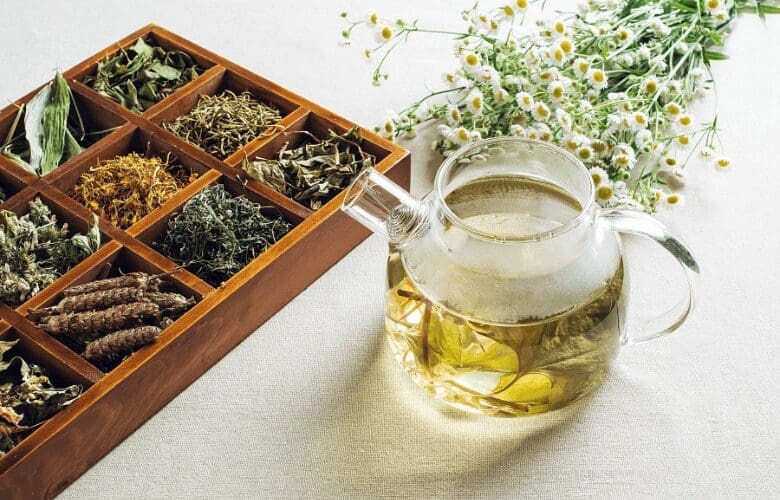
Chinese herbs are a powerful tool in TCM, used to restore balance to the gut and reduce inflammation. Here are some commonly used herbal formulas for IBD relief like in cases of ulcerative colitis and Crohn’s.
- Huang Qin Tang (Scutellaria Decoction) – Huang Qin Tang is known for its anti-inflammatory effects and is often used in TCM to help with gastrointestinal issues like diarrhea and inflammation. The formula contains Scutellaria baicalensis (Baikal Skullcap), which is commonly used for its anti-inflammatory and antimicrobial properties. It’s helpful for conditions involving inflammation, such as UC, and for managing digestive distress associated with inflammation.
- Bai Tou Weng Tang (Pulsatilla Decoction) – Bai Tou Weng Tang is traditionally used to treat diarrhea, especially when bacterial infection or gastrointestinal distress occurs. It’s composed of Pulsatilla chinensis (Pulsatilla) and other herbs that address gastrointestinal issues like diarrhea and infections. This formula is well-known for treating diarrhea and can help with inflammatory conditions of the digestive tract, like those in UC and Crohn’s.
- Si Shen Wan (Four Miracle Pill) – Si Shen Wan is used to strengthen the digestive system, often targeting issues like diarrhea and incontinence. It includes herbs that strengthen the spleen and stomach, which are important components in TCM related to digestion and nutrient absorption. This formula strengthens the digestive system, reducing urgency, and improving overall gut health, which can be helpful for both UC and Crohn’s.
- Sheng Mai San (Generate the Pulse Powder) – Sheng Mai San is designed to boost energy and support the heart, lungs, and Qi. In TCM, it’s used for fatigue, particularly related to depleted energy, which is common among those with chronic illnesses like IBD. This formula helps combat fatigue and may support overall energy levels, which is important for people with chronic digestive issues and inflammation like those seen in IBD.
In TCM, one size doesn’t fit all. That’s why herbal treatments are personalized based on your unique symptoms and needs, ensuring you get the most effective and tailored care possible.
The Bottom Line
Acupuncture and Chinese herbs for ulcerative colitis and Crohn’s disease focus on more than just symptom relief. These ancient therapies work by addressing the root causes like imbalances in your body’s energy. If you’re struggling with IBD, these treatments could be a game changer—helping you find long-lasting relief, restore balance, and support a healthier gut. Get in touch today to learn how acupuncture and Chinese herbs can make a difference in managing your IBD!